
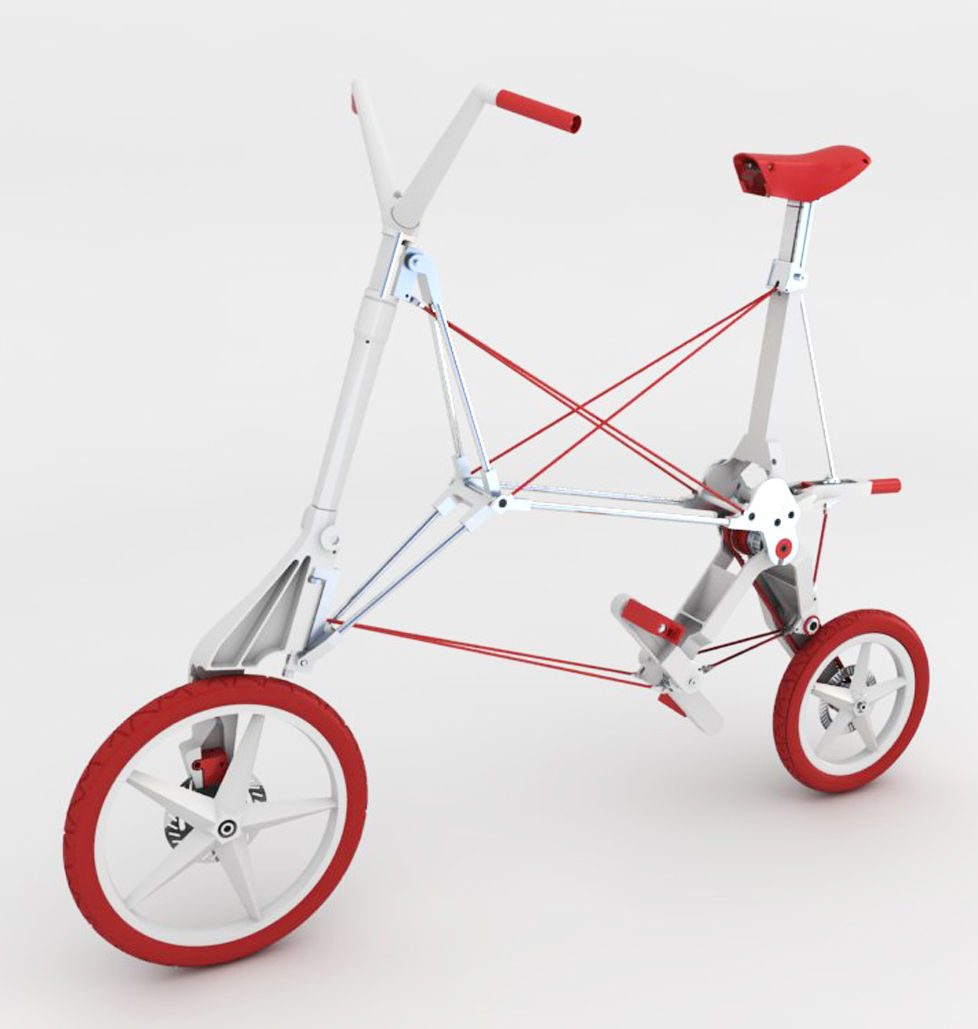
The Intermodal Bike
Multi-modal Integration of cycling mobility through product and process innovations in bicycle design.
Period
2010-2014
General Info
Applied research program
Typology
Funded by the the European Union within the 7th Framework Programme

LED Team
Francesca Tosi (Scientific Responsible)
Alessandra Rinaldi (Scientific Coordinator)
Alessia Brischetto - Department of Architecture DIDA - University of Florence
Alessandro Belli (Project Director) - Urban Technologies, Italy
Partnership
Trilix - ITALY
ATAF - ITALY
Urban Technologies - ITALY
University of Florence - Department of Architecture DIDA
Ticona - GERMANY
Maxon Motors - SWITZERLAND
LPP Ljubjana - SLOVENIA
Collaborators
Grazia Tucci and Valentina Bonora - University of Florence - DICEA Dep., Laboratory of Geomatics for Conservation GECO
Vincenzo Cupelli, Giulio Arcangeli, and Marco Petranelli - University of Florence - Department of Experimental and Clinical Medicine, Health Services Research Section
Abstract
The research project, funded by the European Union within the 7th Framework Programme, was aimed to design a folding bike, super-compact and super-light with electrically assisted pedaling, that is an efficient means of transport for the urban mobility.
The work starts from the idea that the synergy between the bicycle as a means of urban transport and public transport systems (train, tram, metro, bus) and / or private means of transport (taxi, car) can increase the modal share of bicycle on the total of urban and suburban travels, and also can have an effect to discourage the use of private cars in city centers.
LED provided acceptable range of possible posture configurations, to ensure maximum pedaling efficiency, to protect the spinal column, neck and arms from the effects of stressing, and to ensure the effectiveness and control of the vehicle.
Furthermore, it was evaluated and optimized the product usability as perceived and real comfort and pleasure, both during the pedaling action and that transportation, and in relation to the product context of use.
Partners


Universities Involved

Project Gallery


